
Why does my clothes steamer smell musty?
Check stored water, damp accessories and the exact cleaning routine when a clothes steamer smells stale. Learn what to note before contacting the maker.
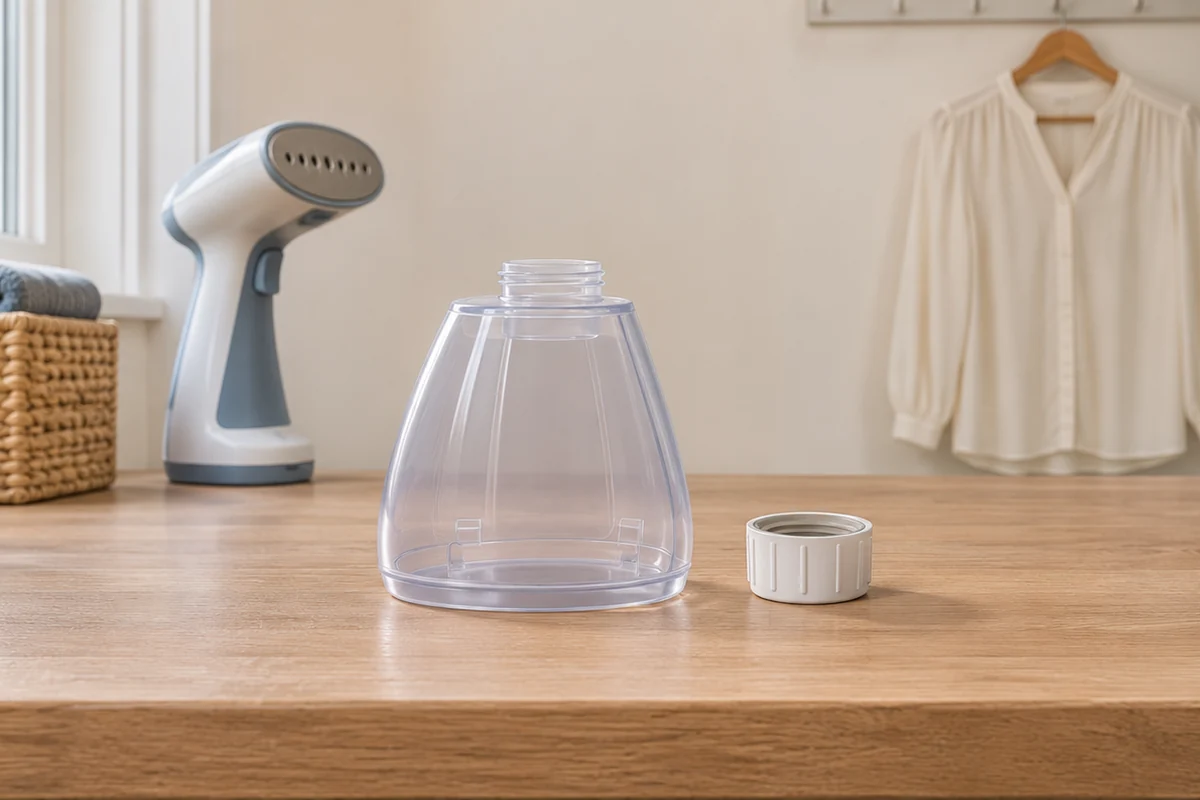
Stop using it on clothes and note when the smell appears
Move the garment aside, switch off and unplug the steamer. Let it cool in its specified resting position before inspecting the tank or accessories. If there is a burning smell, smoke, a damaged cord, a leak or abnormal behaviour, leave it unplugged and contact the manufacturer. An appliance that seems to work can still need assessment before further use.
A stale smell after storage needs a different conversation from a smell that began as soon as you first opened the box. Note whether you noticed it around the cold tank, after attaching a fabric cover or only when steam started. Record whether the appliance had been stored with water inside and whether an accessory was packed while damp.
Smell alone does not identify the source. Avoid opening the body to investigate. The useful checks are the parts the maker permits you to remove or clean, the liquid you put in and the after-use steps. If there is visible residue that the manual does not address, photograph it once the appliance is cool and ask support about the next step.
Empty the tank using the exact after-use routine
Find the full model reference and its maintenance section. Check how to remove or open the tank, how to drain it and whether the manufacturer asks for a rinse. A removable tank can still have a specific emptying direction. Keep a clean area ready to set it down and follow any directions for drying before reassembly.
Take a look at the container you use to refill the appliance. A jug used for scented laundry products can have residue even when the water looks clear. Check the water source too, especially if someone else filled the steamer or you recently changed the water type. Use the water specified for the model on the next permitted fill.
The Russell Hobbs 28370 is a useful example of a routine that keeps the appliance and its attachments distinct. Its maintenance directions start with the steamer off, unplugged and completely cool, then specify a damp-cloth wipe and a subsequent residue-clearing step over an old cloth after drying. The manual also asks you to empty the tank after use. Follow that sequence for the 28370.
Russell Hobbs Steam Genie 2 in 1 28370
A ceramic heated plate adds a pressing option to hanging steaming. The UK instructions describe a steam trigger lock and a 60-second warm-up.
Good for
A hanging finish with occasional pressing of collars or cuffs on a suitable flat, heat-resistant surface.
Bear in mind
Pressing still needs a surface that withstands heat and steam. Unplug before filling through the water inlet.
- Pressing feature
- Ceramic heated plate
- Trigger lock
- 60-second heat-up
For another appliance, use its own sequence. Fridja's f1600 manual specifies cooling before emptying and storing in a clean, dry area without pressure on the hose. A separate descaling procedure deals with mineral build-up. Check which section applies before beginning a cleaning process.
Inspect removable fabric accessories separately
Remove an attachment only after it and the steamer have cooled. Look at any fabric surface that touches clothing. Check whether the material is designed to come off its frame. A sewn-on cover and a removable washable pad can have different instructions, even within one appliance kit.
Scroll sideways to see what to check before cleaning each part.
| Part | What to note | Find in the instructions |
|---|---|---|
| Water tank | Water left after use or unusual visible residue | Cooling, emptying and any approved rinsing |
| Steam head | Marks on the surface or around the outlet | Permitted exterior wipe and any test-cloth step |
| Fabric accessory | Dampness, marks and whether its fabric detaches | Washing method and drying before refitting |
| Storage bag or cupboard | Whether the appliance or attachment was packed damp | Cooling, cord position and storage conditions |
Use only the cleaner permitted for the named part. The 28370 manual allows a small amount of gentle cleanser for specified fabric attachments while giving separate water-only directions for the appliance. Follow that distinction and rinse and dry the attachment as instructed before refitting it. A product allowed on a detached accessory should stay out of the tank.
Check the approved water and scale method
Look for two different tasks in the manual. The filling section identifies the everyday water type. The maintenance section identifies any procedure for existing deposits. Changing the water for future fills leaves the present cleaning task to resolve separately.
Use the specific maker's directions for scale and residue. Philips excludes vinegar, fragrance and several other liquids in its water advice. Other models have their own permitted agents and routines. If a manual does not describe an internal cleaning solution for your symptom, ask the maker before adding one. The water guide compares exact examples and helps you check the water at the tap.
After completing a permitted routine, use any specified old-cloth test before returning to clothing. If the smell remains, leave the appliance off and report it to support. Include whether the smell was present cold, whether it changed after accessory cleaning and what water had been left in the tank. Those observations give the maker more to work with than a guess about the cause.
Store it dry and ready for the next use
At the end of each session, use the after-use steps for the exact model. Leave enough time for cooling, emptying and any approved drying before putting parts into a bag. Keep the cord and hose in their specified storage positions. If two people share the steamer, keep the manual and a note of the permitted water type beside the refill jug.
Manufacturer instructions
Frequently asked questions
Does a musty smell mean my steamer has mould inside?
Smell alone cannot identify what is inside the appliance. Note where the smell seems to come from, empty and clean it as the manual allows, and contact the maker if it persists or you can see unusual residue.
Can I put vinegar or disinfectant in the tank?
Use only what the exact model instructions approve. The Russell Hobbs 28370 specifies water for the appliance and excludes perfumes, oils and additives. Follow any separate cleaning-product instructions only for the part they name.
Should I leave water in my steamer between uses?
Follow the after-use directions for your model. The Russell Hobbs 28370 asks you to empty its tank after use. Check the required cooling, emptying and storage position before packing it away.
Can the fabric attachment cause the smell?
A removable attachment is one place to check, especially if it was stored damp. Clean and dry it only as the attachment instructions allow. Fit or remove it when the appliance and attachment are cool.
What if it still smells after cleaning?
Stop using it on clothes and contact the manufacturer. Give the full model, where the smell appears, the water or products used and the approved steps you completed.