
Best upright clothes steamers
Compare two upright clothes steamers by tank, garment support and working space, with advice on hose reach, water and maintenance.
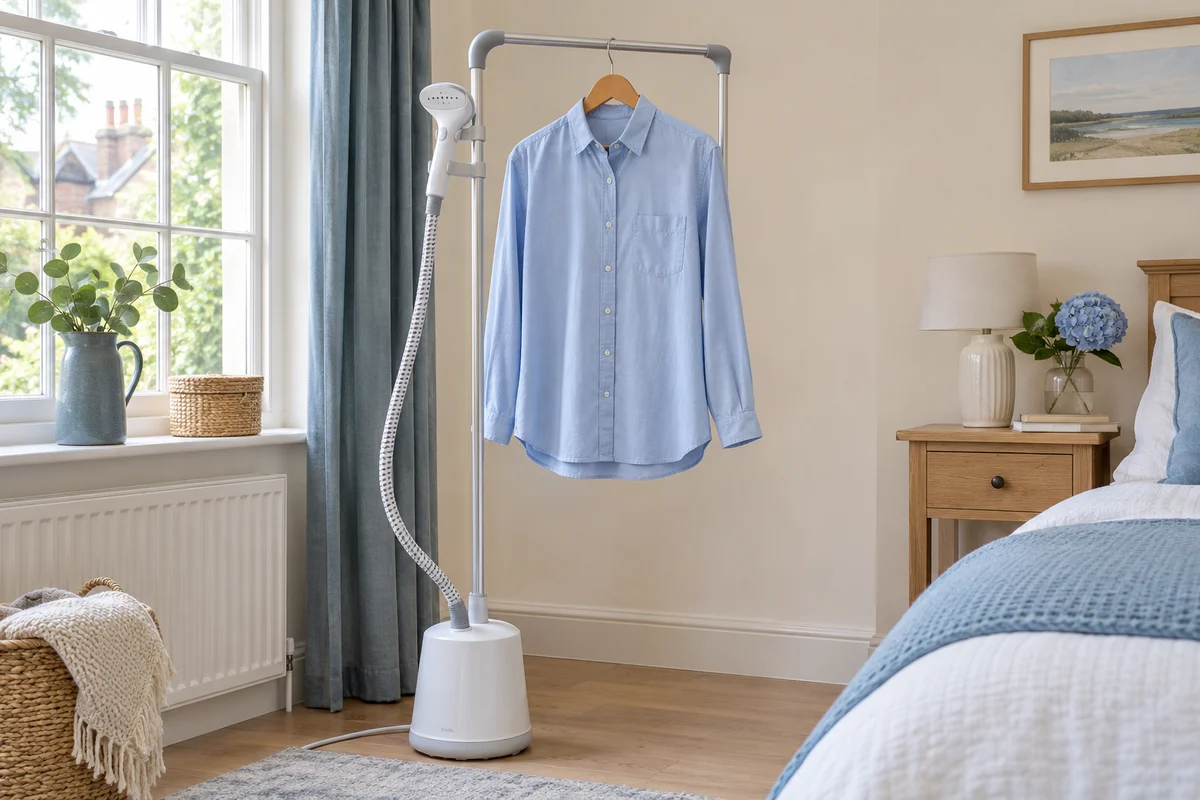
Choose the garment support before tank capacity
The Quest 42320 includes a folding hanger and a 1.8 L tank for a ready-made hanging station. The Fridja f1600 has a removable 4 L tank, two steam levels and a hook for parking its head. Supply a suitable hanger and garment support for the Fridja.
Quest Upright Garment Steamer
42320
Regular sessions with room for a base, pole and hose.
View on AmazonFridja f1600 Commercial Clothes Steamer
f1600/BLK
A 4 L floor tank for suitable panels when there is room for the base.
View on AmazonSpecifications at a glance
Scroll sideways to compare all models.
| Specification | Quest Upright Garment Steamer 42320 | Fridja f1600 Commercial Clothes Steamer f1600/BLK |
|---|---|---|
| Tank | 1.8 L | 4 L, removable |
| Rated power | 1800 W | 2200 W |
| Stated heat-up | 45 seconds | About 45 seconds |
Manufacturer specifications for Quest 42320 and Fridja f1600/BLK. Heat-up describes the appliance reaching its stated startup condition. Actual session length also depends on setup, use and refills.
When is an upright steamer worth the space?
An upright steamer can make sense when you regularly smooth several hanging garments and have room to leave a floor unit set up. The tank stays in the base and a hose carries steam to the head in your hand. Check how you will hang clothes as part of the purchase. A pole can provide a garment support, a rest for the steam head or both, depending on its design.
The two examples here offer different setups. The Quest 42320 includes a folding hanger. The Fridja f1600 provides a larger reservoir and two steam settings, with a separate garment hanger required. Compare those arrangements with your clothes rail, storage space and ordinary session. The recommendations use published model instructions and specifications.
For a single shirt before going out, compare the handheld options. If a crisp collar or a long pressed trouser line is the job you do most, see the steam iron guide and steam generator comparison for equipment with a supported pressing method.
Quest 42320 for an included folding hanger
The Quest 42320 has a 1.8 L tank, a folding hanger and a trouser clamp. Benross specifies 1800 W and a 45-second heat-up. The hanger makes it an option when you want the appliance and hanging point in one place. Check the usable drop below the hanger with a long garment before assuming every hem will clear the base.
Quest Upright Garment Steamer 42320
The 1.8 L tank stays in the base. A folding hanger supports clothes on the stand and Benross quotes a 45-second ready time.
Good for
Regular sessions with room for a base, pole and hose.
Bear in mind
Measure the working space and the garment’s hanging position before setting it up.
- 1.8 L tank
- 45-second stated heat-up
- Folding hanger
- 1800 W rated
Read the setup instructions before opening the stand. Place the base on a suitable stable surface and route the hose as shown. Check where the head parks between garments, then leave enough space to turn a hanger without catching the cord or hose. Use any clamp or attachment only in the position its manual describes.
Choose it around the frame and included hanger rather than the warm-up figure alone. A stated ready time leaves out fetching the appliance, hanging the garment and the cooling and emptying afterwards. If the stand will have to move out of a narrow cupboard for every use, measure that route as well as its working footprint.
Fridja f1600 for a larger tank and your own garment support
The black f1600/BLK has a removable 4 L tank, two steam levels and an adjustable pole. Its pole hook parks the steam head. The manual directs you to hang clothes on your own hanger, so plan a suitable rail or approved hanging point before buying. Keep the garment clear of the base and ensure the head can reach the whole section without pulling the hose.
Fridja f1600 Commercial Clothes Steamer f1600/BLK
The removable 4 L tank stays in the floor unit. Its hose feeds a separate steam head, with two steam settings and a drain in the base.
Good for
Several steam-compatible panels when the base can stand securely and the sections can all be reached comfortably from the floor.
Bear in mind
Requires a clear floor position and space to store an upright appliance. The larger tank does not extend hose reach.
- 4 L tank
- Hose-fed head
- Two steam levels
- Drain valve
Fridja specifies 2200 W and an approximately 45-second startup. Its rated steam output is 47 g/min. Those figures describe the appliance under the maker's conditions. A 4 L tank can reduce interruptions for refilling, but adds water weight to the floor unit. The manual asks you to let the appliance cool before refilling and says to keep it stationary in use.
The larger unit may suit several suitable garments where there is a clear permanent working position. Its name and commercial design do not establish that your fabric permits steam. Check garment instructions, use the appropriate setting and let the cloth cool and dry before judging the result.
Measure a working area, rather than just a parking spot
A steamer may fit beside a wardrobe while leaving too little space to use it. Plan the position with the pole extended and an actual garment hanging. Can you reach the shoulders without stretching? Can a long hem clear the base? Is there room to turn the hanger without brushing a hot head or catching the hose?
The floor should be stable and suitable for the appliance. Check the manufacturer's requirements, the route to a nearby socket and clearance from surfaces that moisture could mark. Keep the hose in the prescribed position, without sharp bends or a loop trapped under the base. Move the appliance only as its maker directs. Keep pulling force off the hose.
For storage, allow the full cooling and draining routine before collapsing anything. Castors help reposition an appliance as instructed but do not make a hot, filled steamer suitable for carrying upstairs. Water adds weight, and moving an empty appliance from a cupboard is a different task from holding its head during use. Consider both before choosing a tank by capacity alone.
What finish should you expect on shirts and dresses?
The useful goal is a smoother hanging garment. A steamer does not provide the same pressure as an iron on a board. If you judge a work shirt by the edge of its collar or a pressed cuff, that is a reason to retain an iron even if you use a steamer on the body.
Check the label before deciding that a delicate-looking item is a steaming job. Fabric composition is only part of the picture. Linings, surface finishes, prints, glued details and mixed-material trims can change the permitted care. The clothes care symbols guide helps interpret the label, but the garment maker remains the source for an unusual item.
Test an inconspicuous area and inspect it after cooling. Use the correct attachment and movement for the model. Never put a hand behind fabric in the steam path or steam an item someone is wearing. Let the garment cool and dry before it goes into a crowded wardrobe. If repeated passes produce dampness without the finish you need, switch to an appropriate pressing method rather than concentrating more steam on one patch.
For a tailored garment, check the suit jacket care guide before applying steam. For window treatments, compare steamers with documented curtain use and check the curtain maker’s instructions.
Water and maintenance can decide the purchase
Think about how you will fill, drain and maintain the appliance. A removable tank can go to the sink, but the base may also contain residual water. Read both parts of the emptying procedure. Find out where the drain sits and whether you can position the cooled appliance as the maker requires without straining or spilling onto a delicate floor.
Read the water instructions for the exact appliance. Fridja's f1600 manual allows distilled, demineralised or filtered water and excludes detergents, oils and fragrances. The Quest has its own filling and cleaning routine. Keep those instructions with the unit, and check the permitted water before refilling after a move or a change to the household supply.
Check how the model deals with mineral build-up before buying. Keep the manual somewhere accessible and record the model number, since a maintenance video for a different version may show an incompatible routine. The Fridja f1600 manual includes exclusions for materials such as suede, velvet and leather. A general claim that steamers suit delicate clothing cannot override those restrictions.
Specifications and instructions
- Quest 42320 specification from Benross
- Quest 42320 manufacturer instructions
- Fridja f1600/BLK specifications
- Fridja f1600 instruction booklet
For tall garments and work near the hem, check hose length and garment support and how to steam a long dress.
Frequently asked questions
Is an upright clothes steamer better than a handheld?
An upright can suit several garments in a session when there is room for the floor unit and hose. A handheld may be easier to store for occasional jobs. Compare the setup with the number and length of garments you steam.
Do both steamers include a hanger?
The Quest 42320 includes a folding hanger. The Fridja f1600 manual identifies its pole hook as a rest for the steam head and asks you to use your own garment hanger.
Which steamer here has the largest tank?
The Fridja f1600 has a removable 4 L tank. The Quest 42320 has a 1.8 L tank. Capacity alone does not establish how many garments you will finish or how well the appliance removes a crease.
Can these steamers make sharp trouser creases?
Check the exact attachment and its instructions for the permitted finish. An iron and board give firm flat support for aligning a long crease. Hanging steam is useful for easing light wrinkles on compatible garments.
Can I use the same descaler in both?
Use the approved method and cleaning product for the exact model. Check its cooling, emptying and rinsing steps before opening a drain or adding a substance. Keep routine filling and scale maintenance separate.