
How to dry towels on a clothes airer
Hang bath towels and bath sheets with air around the pile, check hems and folds, and make an indoor drying routine for heavy loads.
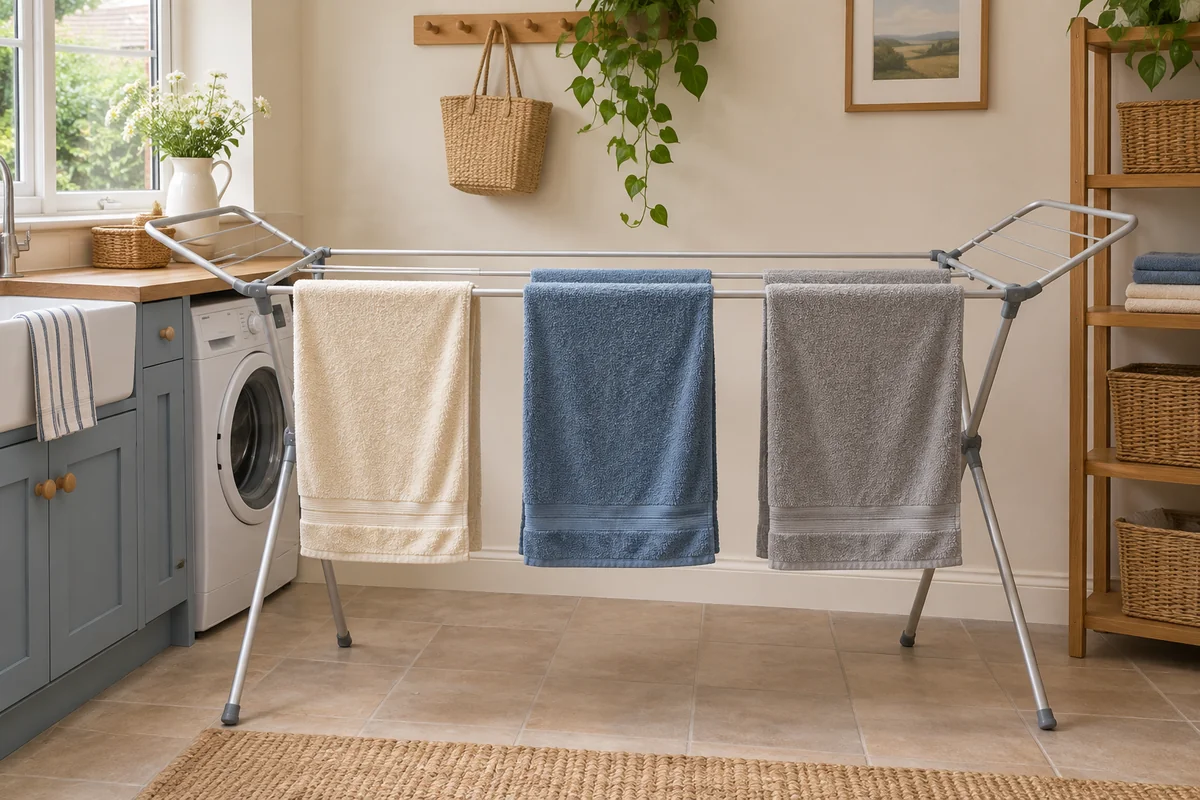
Start with the towel you find hardest to dry
A bath sheet can be much wider and heavier when wet than a hand towel. It also needs more vertical space to hang clear of a shelf or the floor. Give the largest towels their own rail positions before adding smaller pieces. The useful capacity of the rack is the amount of washing it can hold while leaving air around it and giving you access to the damp folds.
Check the label for the permitted wash, spin and drying method. When the wash finishes, take out the towels and give each one a shake to open the fabric and flatten folds. If you repeatedly run out of rails for a normal load, try drying fewer towels together before buying a larger rack.
Use wide rails and a clear drop
Lay a towel across a rail that supports it without gathering most of its width. If it has to hang over the rail, spread the two sides apart where the airer allows. A thick fold at the rail can stay damp after the outer pile feels dry. Leave it accessible so you can shift the towel later.
Raised wings are useful when towels need more drop. The Leifheit Pegasus 180 Solid Classic has wings up to 105 cm high and a frame that measures 157 × 66 cm in use. Check the drop and usable rail length with your own towel rather than treating the full height as hanging space. The cloth must fit without trailing onto the floor or blocking a walkway.
Leifheit Pegasus 180 Solid Classic 81514
An 18 m winged rack with 105 cm-high wings and two small-item holders. The open frame measures 157 × 66 cm across the floor.
Good for
A clear run of floor where longer garments need raised rails and both wings can remain open.
Bear in mind
Wider than the 55 cm Pegasus 150. Allow 66 cm frame width plus laundry overhang and access. The maker describes flat storage but does not give a folded measurement or wet-load rating on this page.
- 18 m drying line
- 105 cm-high wings
- Two small-item holders
A concertina rack can suit smaller towels when you have less floor length. The Minky 3 Tier Plus has fixed rungs over a 59 × 55 cm footprint. Check the clear drop beneath each rung: these shelves do not fold out of the way like the Verso’s rails. Keep large bath sheets on a support that gives them enough drop and use the shorter spaces for hand towels where they hang freely.
Minky 3 Tier Plus 21 m Airer IH87400090V
A three-tier concertina frame with flip-out corners for 12 extra hanger positions. Minky counts 21 m including the hanger provision.
Good for
Mixed small loads where a 59 × 55 cm frame footprint fits and a short folded package helps storage.
Bear in mind
Fixed rungs do not fold separately to create a long drop. Confirm the exact model and supplied frame dimensions for a tight cupboard fit, and use its own instructions for the permitted wet load.
- 59 × 55 cm frame footprint
- 12 extra hanger positions
- 6 cm folded depth
Keep the load balanced and within all stated limits, including any maximum weight per tier or arm. Put the heaviest towels where the instructions allow and keep lighter items from interfering with them. The airer capacity guide explains why drying metres and damp weight tell you different things.
Leave gaps around the pile and check folds
Treat the rails as positions you can choose among. A smaller number of well-spaced towels can give you a more manageable drying setup than covering every rung. Look from the side once the rack is loaded. If two damp surfaces touch, move a towel across a wider gap or leave one rail empty. The middle of a packed rack is easy to overlook.
At the next check, look at the inner fold, thick border, corners and hanging loop. Turn or shift a towel if the outside feels dry but the part over the bar is still damp. Support it as you move it and keep the rack stable. Remove fully dry hand towels to make more room for the bath sheets.
A towel can feel cool without being damp. If in doubt, open out the thick area and compare it with a part you know is dry. Wait until both the pile and the thickest hem are dry before rolling or stacking it. A neatly folded towel with a damp seam can make the whole pile feel stale.
Deal with stiffness separately from drying
An air-dried towel may have a firmer feel. If it is much stiffer than usual, check what changed in the wash as well as how you dried it. Follow the detergent dosing instructions for the load and water hardness. Read the towel label before changing the programme, temperature or adding a laundry product. Avoid building a routine around an additive the towel or machine maker rules out.
Shake the towels before hanging and avoid using a radiator as a drying rail. Christy's towel guidance identifies hard water and overdrying against a radiator as reasons a towel can feel stiff. A quick shake after drying can separate the pile before folding, but it cannot undo residue or heat damage. If a towel label permits tumble drying and you choose to use it, follow the label's heat and drying instructions.
When a towel is damp after a shower, spread it on its own rail as its care instructions allow. A bunched towel dropped into a basket or folded over a narrow hook has several layers in contact. Give it a place to air between uses and keep it separate from towels already dry and ready to store.
Set up the room for a load of wet cotton
Put the rack in a suitable ventilated place with a clear path around it. Wet towels hold water that will enter the room as they dry. More heat around the fabric does not collect that water. Keep air paths and vents open as your home guidance requires, and keep the washing clear of surfaces that should stay dry. See indoor drying with less condensation for room checks.
If you are using heated rails, check the model's loading instructions and the towels' care labels. Do not lay a towel over the whole appliance as a makeshift cover. Keep vents, controls and other specified areas clear. The heated clothes airer guide explains how winged racks and tiers differ. For larger flat pieces, use the bedding guide to plan a longer rail span.
Sources and guidance
Frequently asked questions
How should I hang a bath towel on a clothes airer?
Spread it across a suitable rail with enough drop, keeping it clear of the floor. If you need to drape it over the rail, leave room between the hanging sides and expose the fold as drying progresses.
How do I dry towels if the airer rails are close together?
Leave neighbouring rails empty where needed. If the towels still touch or stop you reaching thick folds, split the load or dry some smaller items separately.
Why are my towels stiff after air drying?
Air-dried towels can feel firmer. Detergent residue, hard water and overdrying with direct heat can affect how they feel. Check the towel and washing machine instructions before changing your wash routine.
Can I dry towels on a heated airer?
Check the towel label and the airer instructions. Spread the towels within the stated total and per-tier limits, and use only an approved cover if one is permitted.
Why are my towel hems still damp?
Hems and woven borders often have more layers than the main towel. Expose them by repositioning the towel and keep it on the rack until those parts are dry too.
How many bath towels fit on an airer?
It depends on the width and drop each towel needs, the room between them and their damp weight. Use the manufacturer’s limits for the whole rack and any individual rails or tiers.