
Can you steam silk?
Find out when a silk blouse, skirt or dress can be steamed, what to look for in a hidden test and when to let the fabric hang instead.
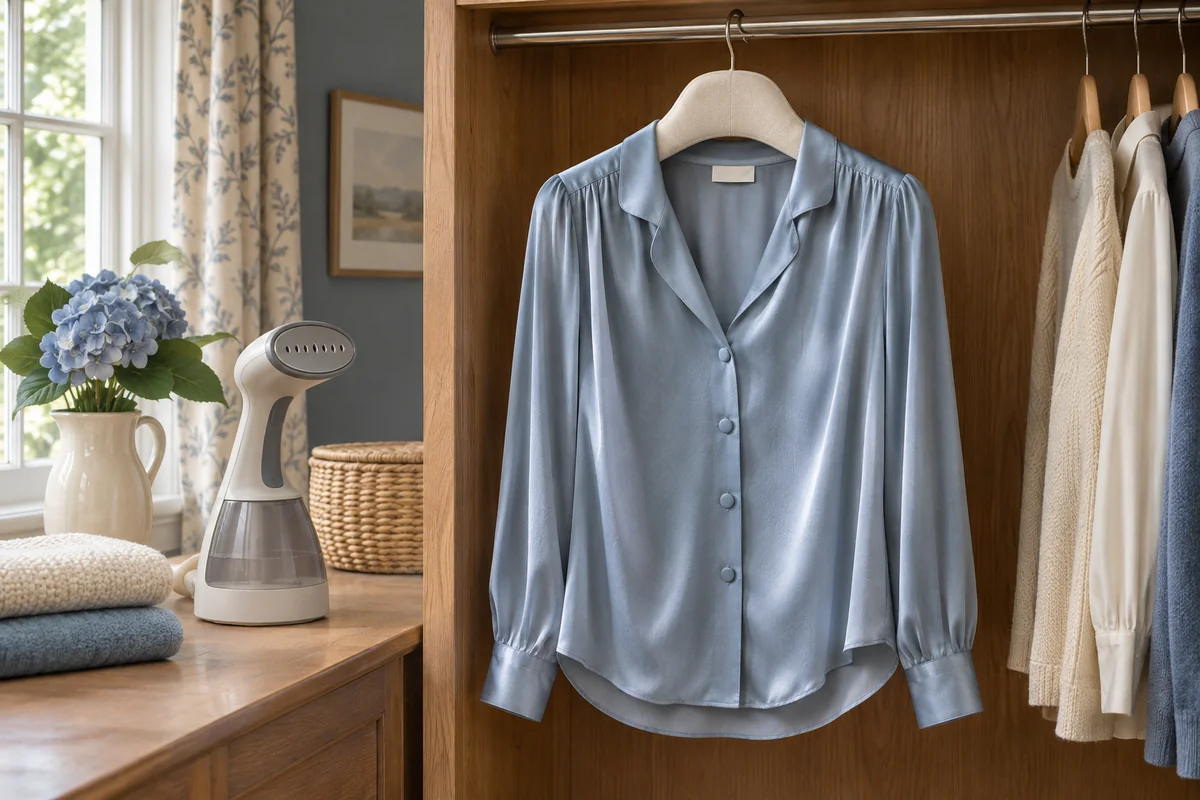
Decide whether steam suits this silk garment
Look at the sewn-in label and the maker's care page for the exact piece. Note any instruction on ironing without steam, pressing on the reverse or professional cleaning. Read the label for the complete garment if it has a lining or decoration. The fibre content tells you the cloth includes silk. The construction and finish help determine which treatment it can take.
Care advice differs by maker. Eileen Fisher advises a low steam setting for compatible silk and asks readers to check garment labels, lining and trim. Sézane specifies low-temperature ironing without steam in its silk care guide. Use the recommendation for the piece you own. If you find ironing instructions without guidance on using a garment steamer, ask the maker before choosing steam.
Look at what you are trying to change. A crease from packing may soften after the garment hangs. A water ring, shiny patch or puckered seam needs a different assessment. Inspect the cloth in good light and decide whether the fold is worth treating. If the label is missing or the piece has sentimental value, take it to a cleaner who can examine the material.
Find the instruction for the face you want to treat
For a plain silk blouse, check whether the maker gives one method for the body and separate advice for its buttons, collar or cuff. If the mark sits on a facing rather than the body, use an inconspicuous test on that facing only if treatment is permitted. The areas may have different finishes even when they appear to be the same colour.
On a silk-blend dress, read the outer and lining descriptions together. A care page for a similar unlined dress may give a different method. Use the full product reference if the maker has several versions. For a silk scarf with a rolled edge, check that you can support it without tugging the hem or having it slip while you work. If the instructions call for professional care or you cannot support the garment properly, show the fold to the maker or a cleaner.
Test a small area and wait for it to dry
Choose a clean hanger with enough support for the shoulders or waistband. Put the garment on it before switching on the steamer. Look behind the area you will treat. A button, facing or second layer can sit behind a section that looks plain from the front. Choose a clear, dry working space with enough room to turn the hanger.
Follow the appliance instructions for filling, warming up and selecting any required attachment. Find the maker's guidance on which way to hold the head and whether it can touch the fabric. If the garment instructions call for a distance or no contact, confirm that the steamer allows you to work that way. If you cannot satisfy both instructions, leave the garment to hang and check with its maker.
Pick a hidden area with the same finish as the part you plan to steam. An exposed seam allowance may have a different face or no print, so look for a folded section of the actual cloth where you can. Make the smallest test the instructions allow. Let it cool and dry fully before judging the finish. Look from two angles for darkening, a ring, puckering or a change in sheen.
Use the gentlest permitted setting on a small fold
If the test dries evenly, work in brief passes on the crease itself. Move the head as the appliance manual shows and keep your hand outside the path of the steam. Avoid stretching damp silk. Let the garment hang between passes and give each section time to settle. If an area develops moisture spots or changes appearance, stop and let it dry.
The Tefal Access Steam Force DT8250G0 has two steam levels and a removable tank. The controls give you a choice of output for garments compatible with the appliance. Follow its instructions for using the lower setting and any model-specific accessories. Compare those instructions with the silk garment's limits before choosing the tool.
Tefal Access Steam Force DT8250G0
The removable reservoir and two steam levels give you control over small sections of compatible hanging fabric. Tefal lists a 2.6 m power cord.
Good for
Small areas of suitable curtains where you can work comfortably from the floor and want to fill the tank separately.
Bear in mind
You hold the steamer and its water. Use only on compatible fabrics and keep the head in the position specified by Tefal.
- Removable tank
- Two steam levels
- 2.6 m cord
Use the reverse only where the garment instructions support it. If you turn an unlined blouse, check whether the side seam or button band sits under the patch you are treating. Keep other layers out of the steam path. If there is a second material behind the cloth that you cannot move aside, use the care advice for the complete item. The guide to steaming a lined garment explains how to spot places where two layers share a seam.
Check the surface before treating another section
A shiny silk satin face can show a mark more readily from certain angles. Look across it in side light after the test and after the first visible pass. A textured or deliberately crinkled silk also has a finish worth preserving. Smooth only the unwanted fold rather than trying to flatten the surface throughout.
Let a wet spot dry on its own before touching it. Rubbing, rewetting or applying more heat can make the result harder to assess. If the patch is still visible when the garment is dry, explain the fabric, finish and treatment to the maker or cleaner before trying to remove it.
When you have finished, leave the item hanging until it is cool and dry. Feel near thick seams and behind the facing if it was exposed to steam. If the garment is long, keep its hem clear of the floor and give it room to hang. See how to steam a long dress for ways to check the full drop and reach before starting.
Garment and steamer instructions
Frequently asked questions
Can every pure silk garment be steamed?
Care varies with the weave, finish and construction. Follow the label and the garment maker’s guidance for the exact piece. Some makers recommend gentle steam on compatible silk and others specify a method without steam.
What if my silk says dry clean only?
Follow the cleaning instruction. Ask the garment maker or a professional cleaner about crease removal before trying steam at home. Take the garment and its care information so they can assess the finish, lining and trim.
Should I steam silk inside out?
Use the side specified by the garment maker. The reverse can help avoid touching a delicate face where the instructions permit that approach. Steam and moisture can still reach the face and any other layers.
Why has the steamer left a spot on my silk?
A droplet can darken the cloth while it is wet. Stop and let the area dry fully, then check it in good light. If a mark remains, ask the garment maker or a cleaner about the fabric before applying more water or heat.
Can I steam silk on the lowest setting?
Use a low setting only if the exact garment and steamer instructions permit the method. Check any required attachment and whether contact is allowed. A low setting still applies heat and moisture.