
How to dry jeans indoors
Dry jeans indoors by opening the legs and pockets, giving the waistband room, and checking thick seams before you put them away.
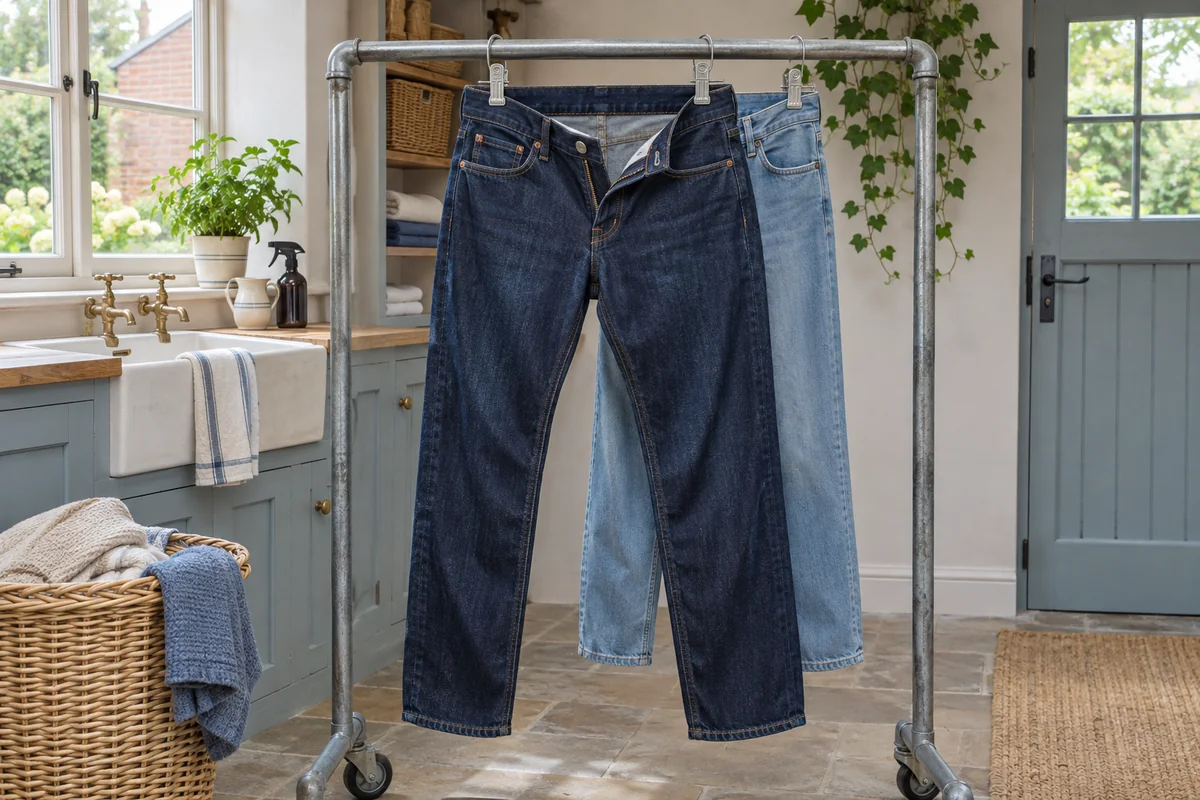
1. Read the label and deal with the pockets
Jeans can feel dry down the front of the thigh while the pocket bags are still wet. Look at the label before you hang the pair, particularly if it is raw, coated, decorated or made with stretch fibres. Some jeans are intended to hang, while a particular pair may have a flat or shade instruction. Levi’s general denim guide advises turning jeans inside out and hanging them away from direct sunlight, but its raw denim guidance gives a flat-drying method. Use the instructions for the pair you have. See how to read clothes care symbols if the label uses pictures.
Remove anything still in the pockets. If the jeans can dry inside out, turn them gently and draw the front pocket bags clear of the denim as far as they naturally extend. A pocket that remains tucked into the waistband sits behind several layers. Smooth out the knees and open any rolled cuffs you can safely undo. Leave permanent or stitched turn-ups alone and plan to check them separately. Keep wet dark denim clear of light textiles and surfaces that might pick up colour.
If the wash has left the pair dripping, use only a spin setting the garment and washing machine permit. A higher speed is a poor fit when the care instructions restrict spinning. Set up for any runoff before placing the jeans on an airer. Keep the floor beneath the rack safe and follow any drip-drying instruction on the label.
2. Give the pair room on the rack
If the label permits line drying and you have a suitable clothes hanger, support the pair evenly and check that the hanger and its attachment will hold the damp load. Open the legs and make sure the hems cannot brush the floor or press against a lower shelf. A tall rack only helps when the usable distance below the hanger or rail is enough. Measure to the obstruction rather than using the full rack height.
A raised wing is useful when a standard rail leaves the cuffs resting on a lower part of the rack. The Leifheit Pegasus 180 Solid Classic 81514 has wings up to 105 cm high. That is the height of the wings, so check the actual drop after draping your pair. Leave the adjacent bars free if denim swings into another garment.
Leifheit Pegasus 180 Solid Classic 81514
An 18 m winged rack with 105 cm-high wings and two small-item holders. The open frame measures 157 × 66 cm across the floor.
Good for
A clear run of floor where longer garments need raised rails and both wings can remain open.
Bear in mind
Wider than the 55 cm Pegasus 150. Allow 66 cm frame width plus laundry overhang and access. The maker describes flat storage but does not give a folded measurement or wet-load rating on this page.
- 18 m drying line
- 105 cm-high wings
- Two small-item holders
When the legs are too long for a single rail, use a wider support and distribute the fabric across several bars in a configuration the airer allows. Keep the waistband accessible and avoid piling one leg directly over the other. The Vileda Infinity Flex 169959 has an extendable centre deck. It can give long denim more room to spread when you have floor space for its open frame. Check the full open dimensions before extending it into a walking route.
Vileda Infinity Flex Extendable Airer 169959
The centre rails extend from 117 cm to 205 cm, with raised side wings for longer garments. Vileda lists up to 30 m of drying line.
Good for
Bedding and broad items when you have a clear strip of floor for the open wings.
Bear in mind
The full frame is 216–304 cm long with the wings open. Check room for hanging laundry and access. The maker's product page gives no separate maximum wet-load figure.
- Up to 30 m drying line
- 117–205 cm central rack
- 8 cm folded depth
If the label calls for flat drying, use a level support large enough to carry the whole pair without the legs hanging over the edge. Spread the jeans in their normal shape, with the waistband open and each leg supported. See flat drying rack options and check their usable dimensions. A small sweater rack may need to be ruled out for full-length denim.
3. Reposition the areas that are still damp
At the first check, slide your hand between the legs or layers where they cross. If one area feels wetter than the rest, work out what is covering it before turning the jeans. Move the crease over the rail to a different point, draw a pocket bag out again or shift the pair so the waistband has a gap around it. Pick up the weight of the jeans as you move them to avoid pulling the rack sideways.
Start with the waistband and fly. Check the inner waistband where it meets the fly, and the fabric behind the fastening. Open the front enough for air to reach the layers if the shape and care instructions allow it. Check beneath broad belt loops as well.
Then check the pocket bags and seams. Feel the deepest corner of each pocket and the thick seam between the legs. A thick intersection can take longer than a broad panel. Give it another open position while the rest of the garment continues to air.
Finish at the hems. Check both edges of a fixed turn-up or reinforced cuff. Compare the seam with the thin fabric next to it before deciding the pair is ready. If in doubt, keep it spread out and check again before folding.
4. Adjust the setup before adding heat
If the room feels damp or the windows regularly collect moisture while you dry clothes, check ventilation and reduce the size of the load. Keep required vents clear and move the rack away from walls or furniture that the jeans might touch. A rack that dries one pair well can behave differently when it is filled with towels too. The indoor drying and condensation guide has room checks you can apply.
For a heated rack, follow both the jeans label and the model instructions for load, positions and cover use. A heated rail leaves the other surfaces dependent on how you arrange them. Keep the waistband and pockets accessible and follow the manufacturer's directions before repositioning anything near a hot part. See how to load a heated clothes airer for the difference between a total limit and a limit per tier.
Make room for jeans in a mixed load
If you're drying two pairs on the same rack, put each in its own zone so the waistband of one pair is clear of the other pair's legs. Give the pair with thicker denim the easier position to turn. Move fully dry lightweight items away first. If the second pair forces the first into a tight fold, split the load. Compare tower and winged racks by usable drop or width if that problem keeps recurring.
Sources and guidance
Frequently asked questions
Should I dry jeans inside out?
Levi’s recommends drying many jeans inside out in shade to protect the colour and expose the pockets. Follow the instructions for your pair, especially for raw denim, coatings or trims.
Is it better to hang jeans by the waist or drape them over a rail?
If the label permits hanging, choose the arrangement that gives the waistband room and keeps the hems clear. A suitable hanger can work when you have enough drop. Drape over a rail when you need more support, then shift the contact line as the fabric dries.
Why are the jeans dry except for the waistband?
The waistband has multiple layers and often overlaps with belt loops and the fly. Open it out, move it away from the rail and other garments, and leave it exposed until the inside is dry too.
Can I dry jeans flat indoors?
Yes, when the label calls for or permits it. Use a suitably sized support, spread the jeans to their normal shape and keep the legs separate. Some raw denim has specific flat-drying instructions.
How long do jeans take to dry on an airer?
The wash programme, thickness of the denim, room conditions and amount of exposed fabric all affect timing. Check the pocket bags, fly and folded hems before putting the jeans away.
Can jeans go on a heated clothes airer?
Check both the garment label and the airer manual. Keep within the stated damp load limits and use the approved rail layout. Give pocket bags and thick seams space, and keep controls and required clearances accessible.