
Garment steamers
Choose a steamer for the way you dress, from one shirt before work to a rail of clothes.
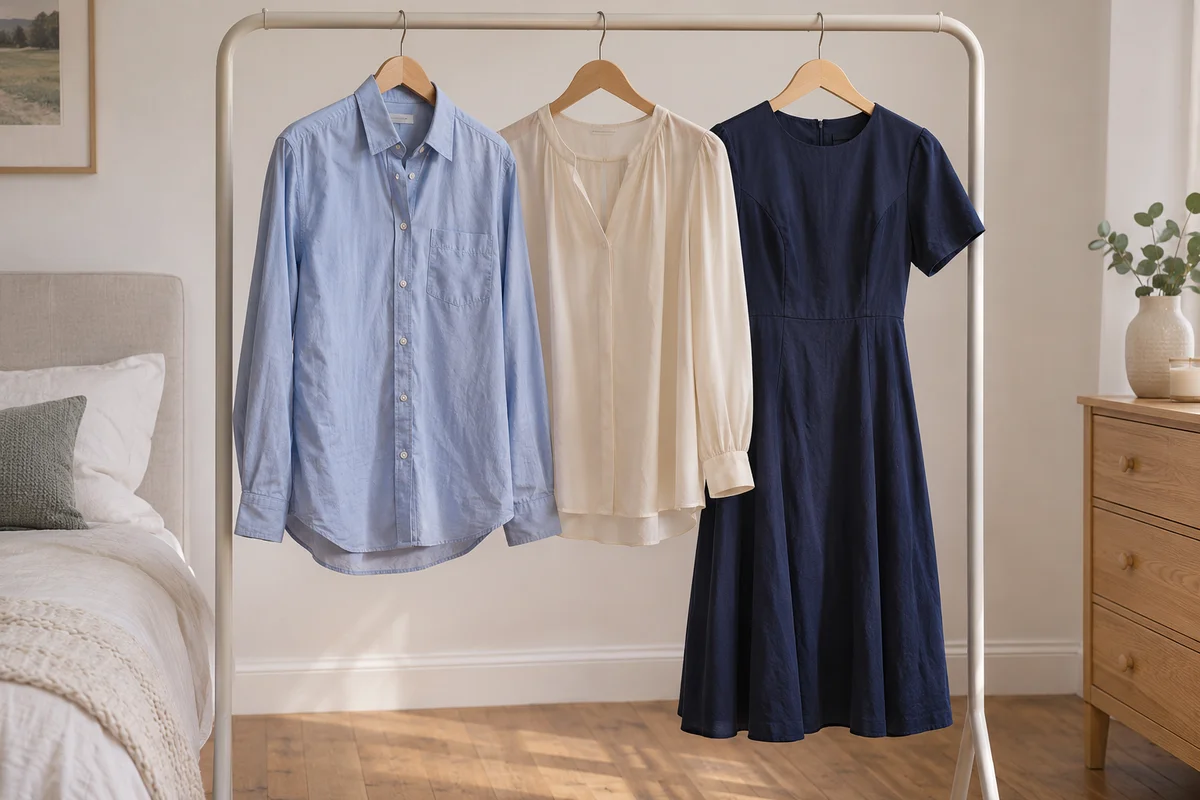
Find your starting point
Choose a format, compare the setup or learn a method for a garment you already own.
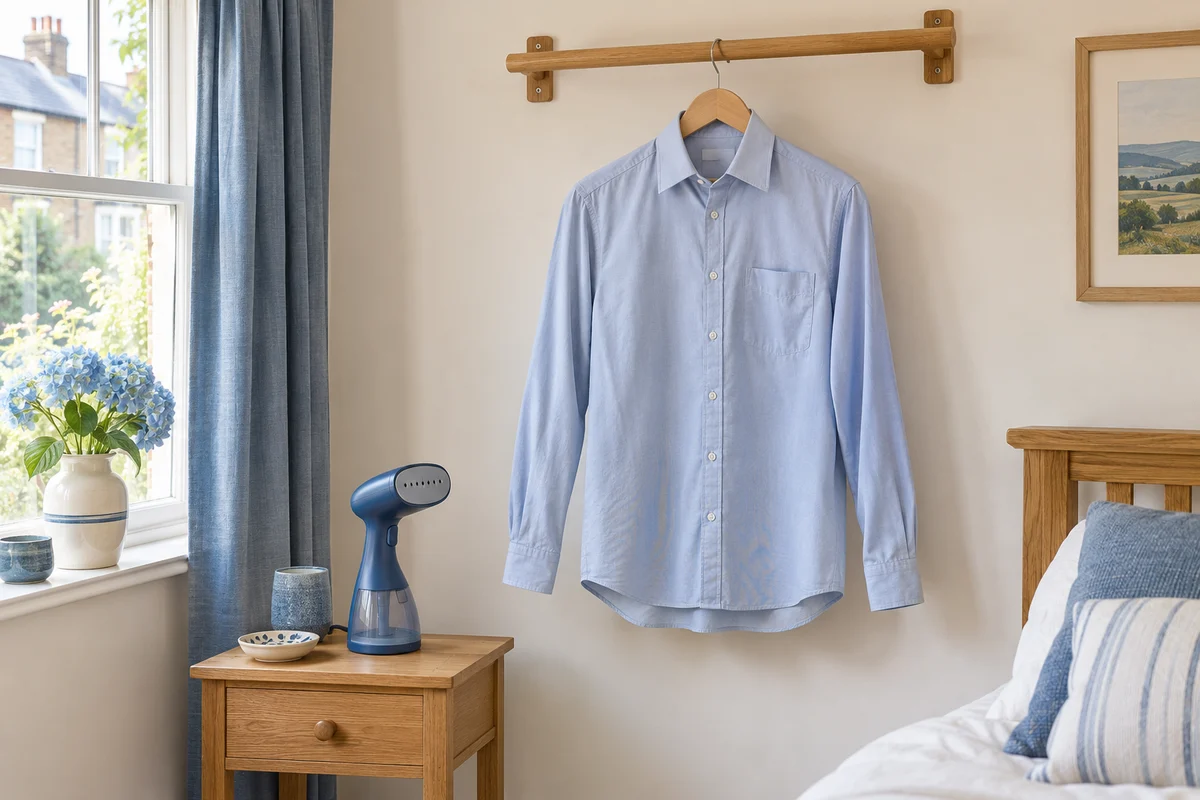
Handheld steamers
Compare compact storage, tank capacity and the positions each model permits.
Compare handhelds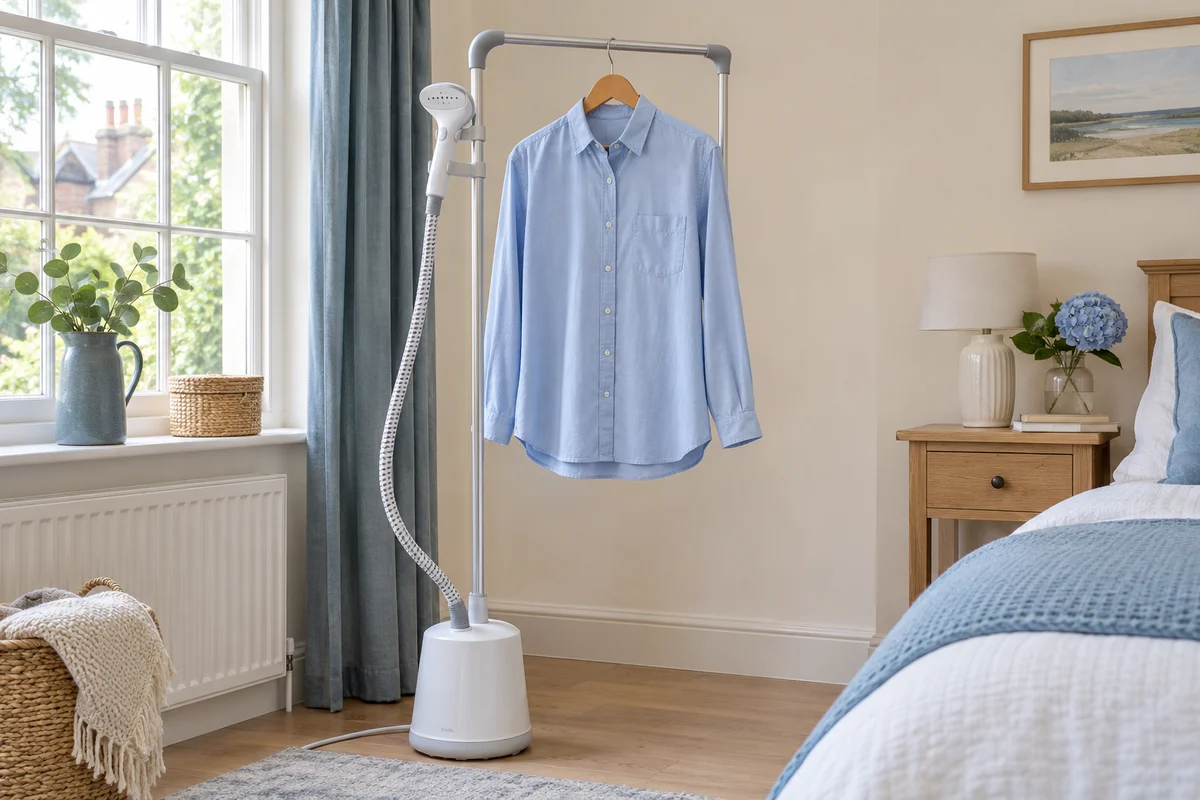
Upright steamers
Check the floor space, hose reach and how each setup supports the clothing.
Compare upright models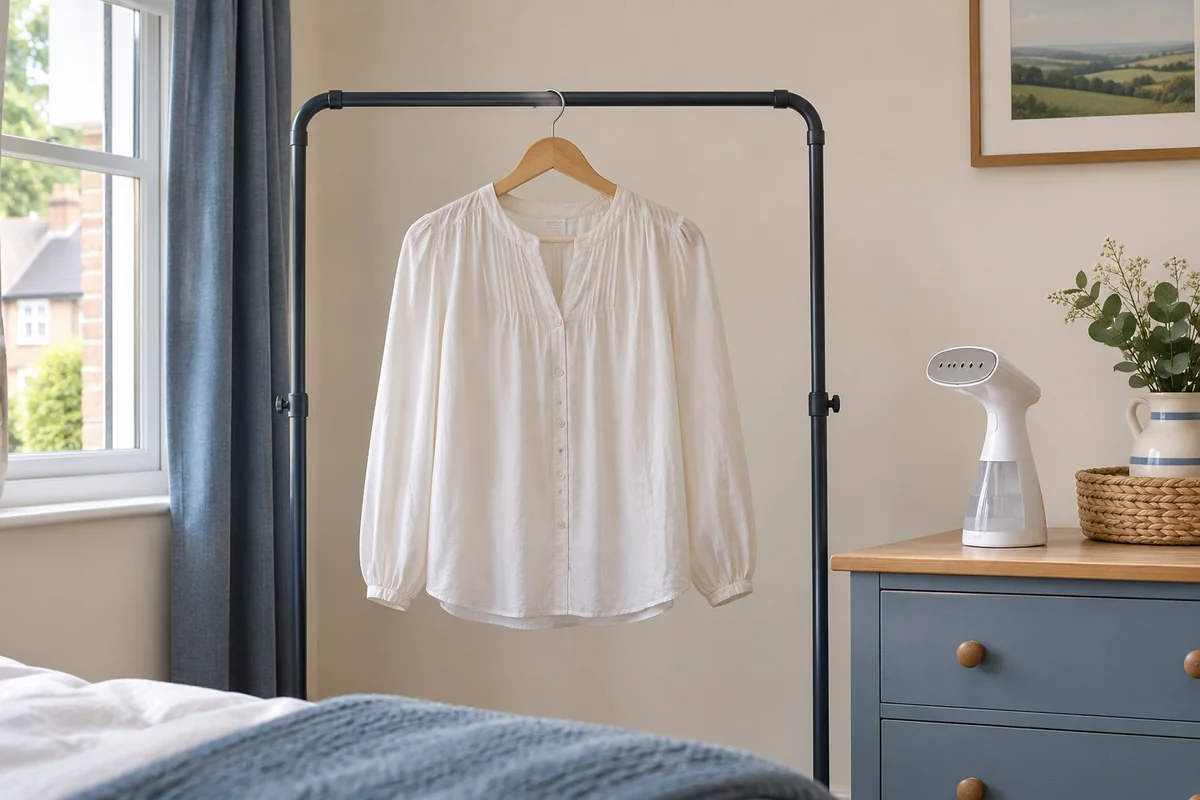
Use a handheld steamer
Prepare the garment, hanging point and appliance before working through the fabric.
Follow the practical guideAll garment steamer guides
Choose a steamer
Compare formats and exact models by storage, tank and intended working position.
Set up & look after
Plan the hanging point, hose reach and water routine before starting a session.
Steam your clothes
Find a method for the garment, lining or trim you want to treat. Start with its care label.
Match the setup to the clothes you steam
Handheld or upright?
Choose a handheld steamer if you usually work on one or two garments and want to put the appliance away afterwards. Check the weight with water in the tank and how the handle balances. For scale, the foldable Philips 3000 STH3000/26 has a 100 ml tank and a stated output of up to 20 g/min.
An upright steamer is worth considering if you often steam several hanging garments in one session and can spare space for a stand. Compare the tank, usable hose reach and support for the garment. An upright tank can hold the water at floor level, while the hose and stand still need room around them.
Philips 3000 Series Handheld Steamer STH3000/26
A folding handle and 100 ml removable tank make this a small appliance to put away after one or two garments. Philips states up to 20 g/min of continuous steam.
Good for
Quick touch-ups on hanging garments whose labels allow steam.
Bear in mind
Use it vertically. It has one steam setting, a small tank and a 220 V rating to check before travelling.
- 100 ml tank
- Folding handle
- Vertical use
- 2 m cord
Check how you’ll hold the garment
Some handheld models are designed for vertical use, while others also permit use on a flat surface. Check the exact model’s instructions before tilting it or using it like an iron. Plan for a stable hanging point with room to move the steamer around hems and sleeves. Keep steam away from your hands and clothes someone is wearing.
Read the garment’s care label first. Pleats, glued decorations and structured sections deserve special care. If the main job is pressing a crisp collar or crease, look at irons and boards.
Think about the second use as well as the first
A large tank helps when you work through several garments, while a removable tank can make refilling easier at a shallow sink. For occasional use, the size after folding and the ability to empty and dry the tank may matter more than maximum steam output. Keep the model number handy for its water guidance and the cleaning instructions supplied for your model.
Frequently asked questions
Can a clothes steamer replace an iron?
A steamer can help with hanging creases on compatible garments. A board and iron give you a pressing surface for cuffs, collars and defined creases. Choose according to the finish you need and the care label.
Can I hold any handheld steamer horizontally?
Check the exact model instructions. Some models permit horizontal use, while others require an upright operating position. Tilting a vertical-only model can lead to water reaching the head or interrupting steam.
Is a folding steamer suitable for travel abroad?
A folding handle helps with packing but does not establish electrical compatibility. Check the voltage and frequency on the appliance and the destination supply. A plug adaptor alone does not change the voltage.
Should I buy an upright steamer for one shirt?
A handheld can be easier to put away after a short job. An upright can suit several garments in a session, provided you have room for the stand and hose. Compare the actual setup and storage dimensions.
What should I check if my steamer stops producing steam?
Switch off and let it cool before checking the tank fit and water level as the manual directs. Then check the permitted operating position and any model-specific priming or cleaning steps. Stop using a leaking or damaged appliance and use the manufacturer’s support route.