
Indoor drying
Make room for wet washing and choose an airer you can live with between loads.
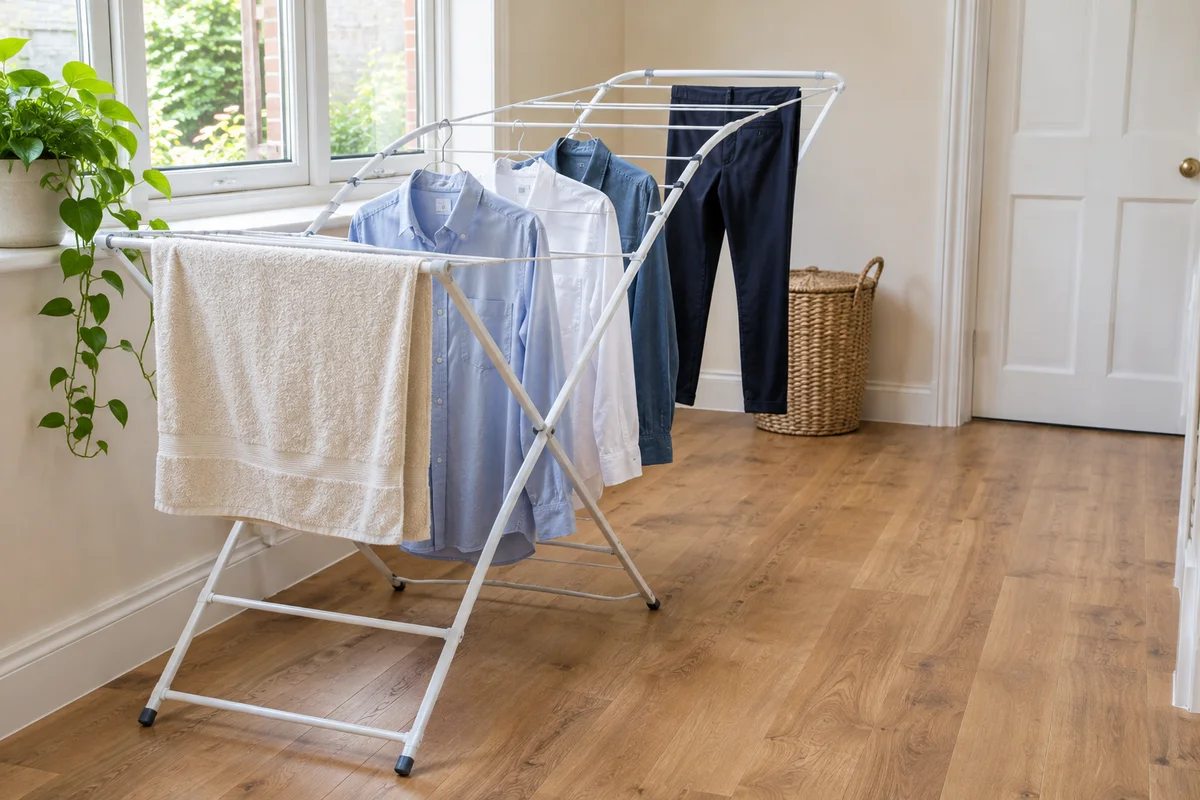
What would help with your next load?
Find an airer that fits, compare a heated format or improve the setup you already use.
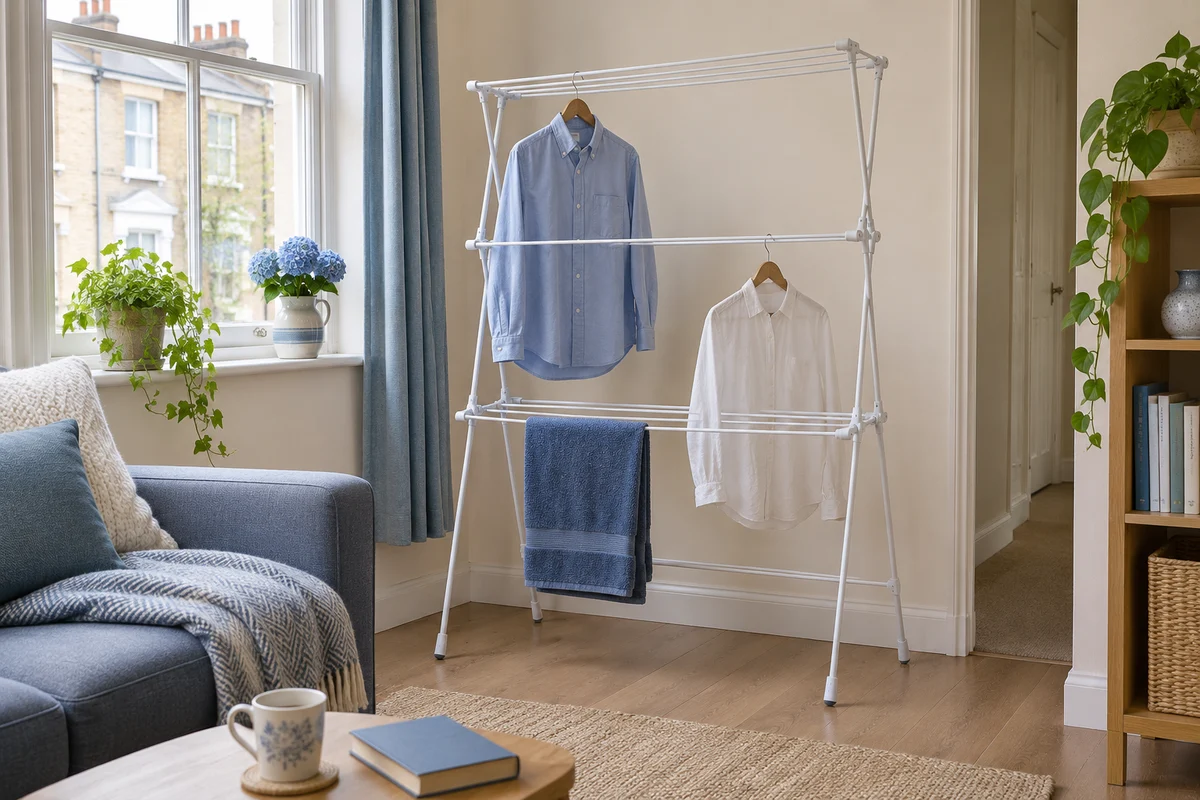
Airers for small flats
Measure the open frame, laundry overhang and the gap where the folded rack will live.
Find an airer that fits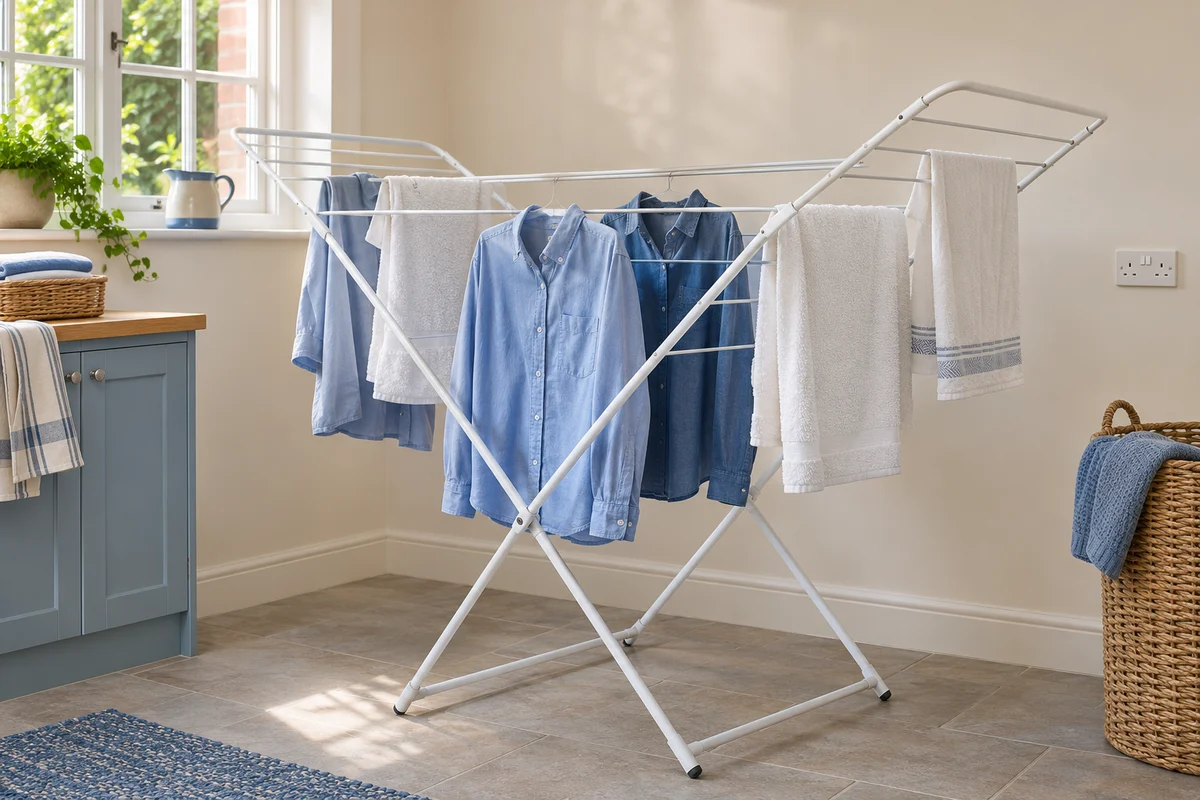
Heated clothes airers
Compare rail layouts, usable loading and the controls behind running costs.
Compare heated airers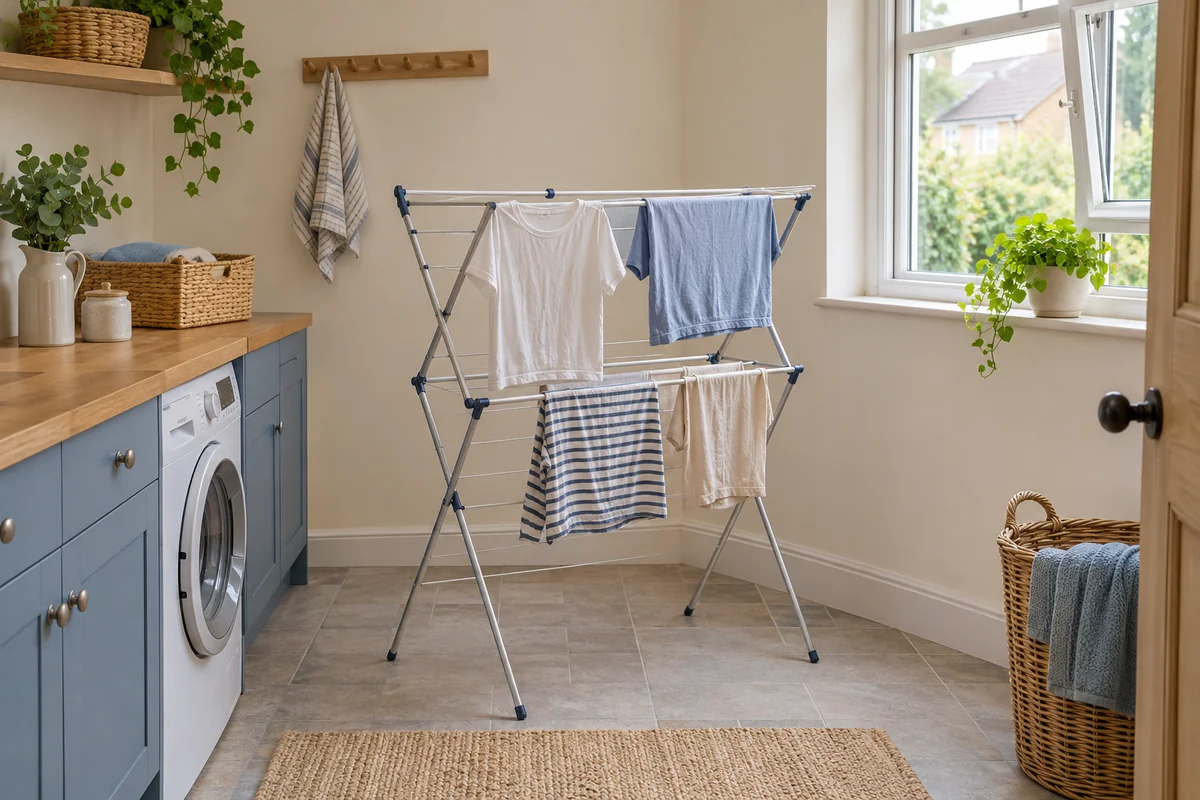
Less condensation
Plan spacing and ventilation alongside the rack and the washing.
Improve the drying setupAll indoor drying guides
Find an airer
Match the open footprint, hanging drop and fixing requirements to the space available.
Heat, space & costs
Compare heated formats, covers and running-cost assumptions before choosing a setup.
Dry your wash
Find rail layouts for your washing and understand how to manage moisture indoors.
Plan the space, load and room conditions
Measure the space while the airer is open
Mark out the full width and depth on the floor, including any wings. Leave room to load the far side and keep doors and walkways usable. Then measure the cupboard or gap where the folded airer will go. Check height and width as well as folded depth.
A tower uses height and suits a narrow floor area, though closely spaced tiers can make long items awkward. A winged rack makes it easier to spread towels and trousers over longer bars if there is clear floor space. Count the bars you can use for your usual load. Two racks with similar advertised drying length can arrange that length very differently.
Minky 3 Tier Plus 21 m Airer IH87400090V
A three-tier concertina frame with flip-out corners for 12 extra hanger positions. Minky counts 21 m including the hanger provision.
Good for
Mixed small loads where a 59 × 55 cm frame footprint fits and a short folded package helps storage.
Bear in mind
Fixed rungs do not fold separately to create a long drop. Confirm the exact model and supplied frame dimensions for a tight cupboard fit, and use its own instructions for the permitted wet load.
- 59 × 55 cm frame footprint
- 12 extra hanger positions
- 6 cm folded depth
Decide if a heated airer earns its space
Compare how much washing the rails hold, where the socket sits and what the instructions allow you to do with covers. As a size reference, Lakeland lists its standard Dry:Soon three-tier airer at 73 × 75 × 137 cm overall, with 21 m of drying space, a 15 kg maximum load and 8 cm folded depth. The Deluxe and Mini have different dimensions.
For an example running cost, a 300 W airer drawing its full rated power for four hours uses 1.2 kWh. At an illustrative tariff of 28p/kWh, that is about 34p. Four hours is an example run time. Use your unit rate and the actual run time or measured consumption for your own estimate.
Plan for the moisture in the washing
Use the indoor drying and condensation guide to plan ventilation and check room conditions. Bedding and towels need different rail spacing, especially if you have a mixed load.
Heating the rails leaves moisture to deal with in the room. Leave space around the washing and use available ventilation. If a care label calls for flat drying, support its whole shape on a suitable flat surface or mesh support. See the flat-drying guide and drying symbols before choosing a method.
Frequently asked questions
What should I measure before choosing an indoor airer?
Measure its fully open width, depth and height, including any wings. Then check folded dimensions against the storage space, and allow room to load the rack without blocking doors or walkways.
Does a heated airer remove moisture from the room?
Heated rails add warmth to the washing. The water still enters the surrounding air as it evaporates, so plan ventilation and spacing as part of the setup. Follow the airer’s instructions for placement and covers.
How do I estimate the cost of a heated airer?
Multiply power in kilowatts by hours used and your electricity unit rate. For example, 0.3 kW for four hours is 1.2 kWh. Actual consumption can vary with controls, so use measured energy where available.
Can I lay a wool jumper across an airer?
Follow the garment label. If it calls for flat drying, support the whole garment in its shape on a suitable flat surface or mesh shelf. Do not let a heavy wet jumper hang from a small section of fabric.
Does a larger drying length mean a larger usable load?
Drying metres describe the total line length, rather than a guaranteed number of washing-machine loads. Garment width, hanging drop and spacing affect what you can use. Check the exact rack’s wet-load and tier limits separately, where the maker provides them.