
Best lint removers for dark clothes
Compare a lint roller, reusable brush and fabric shaver for visible pale fibres, pet hair and attached bobbles on dark clothing.
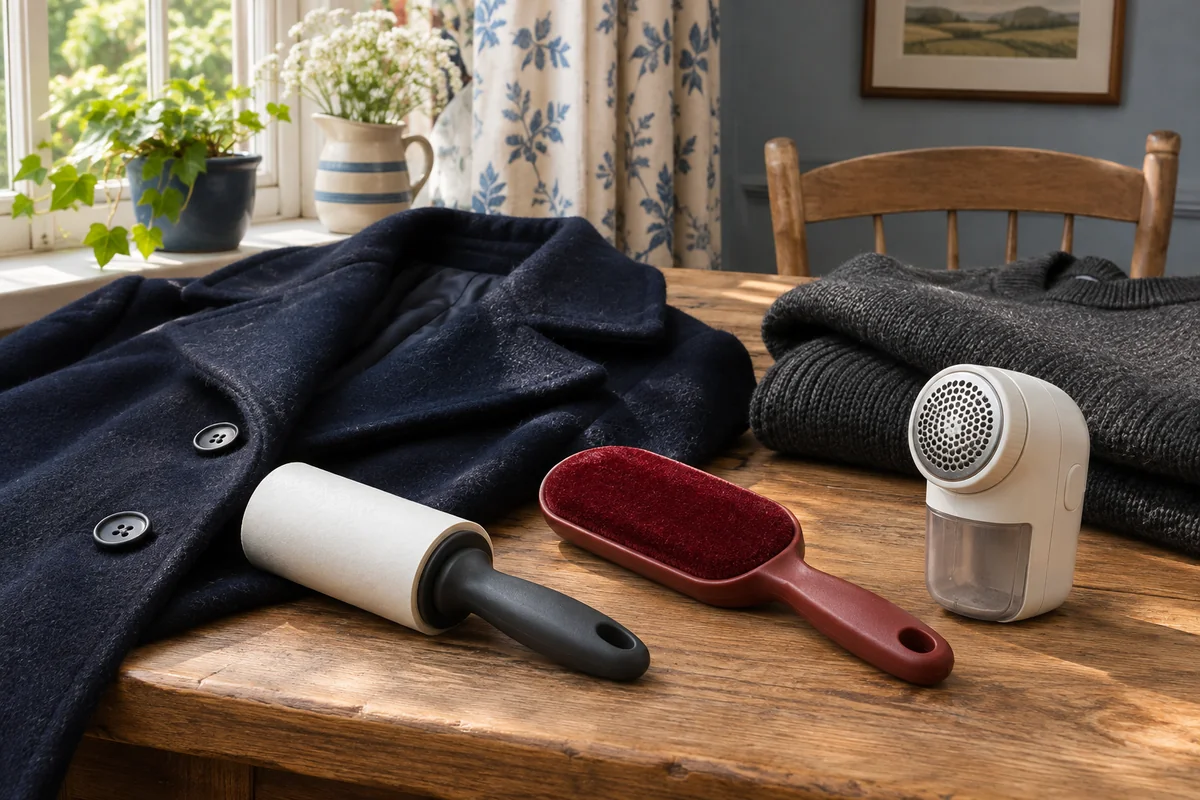
Choose by what you can see on the fabric
Use the Scotch-Brite roller for occasional loose specks and hair, or the OXO FurLifter brush for regular surface cleanup without replacing sticky sheets. The Philips GC026/80 is a guarded shaver for attached bobbles on suitable fabric. Test whichever tool you choose on a hidden patch.
Scotch-Brite Everyday Clean Lint Roller
834R-56UK
Peel-off sheets for visible loose specks on a suitable garment.
View on AmazonOXO Good Grips FurLifter Garment Brush
12168800
A reusable garment brush with a base that strips off loose hair and lint.
View on AmazonPhilips Fabric Shaver
GC026/80
Replaceable AA batteries and a height cap for occasional de-bobbling.
View on AmazonSpecifications at a glance
Scroll sideways to compare all models.
| Specification | Scotch-Brite Everyday Clean Lint Roller 834R-56UK | OXO Good Grips FurLifter Garment Brush 12168800 | Philips Fabric Shaver GC026/80 |
|---|---|---|---|
| How it works | Adhesive peel-off sheets | Reusable microbristle brush | Guarded rotary cutter |
| Material it removes | Loose lint and hair | Loose hair and surface lint | Attached pills on suitable fabric |
| Upkeep | Peel away used sheets | Self-cleaning base | Detachable pill container and supplied brush |
Manufacturer specifications and care instructions. These picks cover different surface problems. Choose by the garment and type of debris, then test a hidden patch.
Look closely at the pale marks first
Dark clothes make light fibres and pet hair easy to see. Look at the affected area in daylight before picking a tool. A loose hair will lie across the weave and can move with a gentle pass. An attached bobble is a small raised ball of fibres. A pale seam or patch may instead be wear, a change in the finish or a mark that needs cleaning. Steamery’s explanation of lint and pilling.
Use the same check on different areas of the garment. A pair of black trousers can collect surface fluff across the thighs while the inner legs show attached pills from rubbing. Choose the gentlest suitable tool for each area and reassess after one pass. An intentionally brushed or fuzzy surface needs its own care instructions.
Scotch-Brite Everyday Clean roller for loose specks before wearing
This is the simplest choice here if a dark shirt or trouser leg has a few visible fibres and the fabric tolerates an adhesive sheet. The 3M UK four-pack is 834R-56UK and contains four rollers with 56 sheets each. The roller is 10 cm long, a size to consider if you will work on a trouser panel or coat shoulder. 3M UK model details.
Scotch-Brite Everyday Clean Lint Roller 834R-56UK
Four adhesive lint rollers each contain 56 sheets. Peel away the used layer when it stops picking up surface debris.
Good for
Loose pale fibres, dust and hair on suitable dark clothes, especially for an occasional touch-up before wearing.
Bear in mind
The sheets are consumable. Test the adhesive on an inconspicuous area first, especially on raised or delicate finishes.
- Four rollers
- 56 sheets per roll
- 10 cm roller length
Lay the garment out or hang it so you can see the surface. Test the adhesive lightly first. Roll gently over the visible specks, then peel away a used layer once it is covered. A multi-pack lets you keep a roller in more than one place if that suits your routine. It also means keeping and discarding spent sheets. For frequent use, decide whether that is more convenient than cleaning a reusable brush.
OXO FurLifter garment brush for regular loose hair
Choose this brush for compatible clothing when loose hair appears often and you prefer to clean a reusable surface. The OXO 12168800 uses microbristles and has a base that strips debris from the brush. It is the garment model. Use light passes in the indicated direction and test a hidden patch on the item you want to treat. OXO UK FurLifter garment brush.
OXO Good Grips FurLifter Garment Brush 12168800
A reusable microbristle brush lifts surface debris from suitable clothing. Its storage base strips collected hair and lint from the brush.
Good for
Coats and other suitable garments with loose pet hair or surface lint, after a small patch check.
Bear in mind
Use light strokes and check the fabric surface as you work. Attached bobbles need a method suited to pilling.
- Microbristle brush
- Self-cleaning base
- Reusable
A dark coat may show hairs on its shoulders and sides. Work on a plain section first, then check whether the surface nap has changed or the brush has caught a thread. Keep the brush clear of raised decoration, loose stitching and areas where the garment maker specifies a different tool. Remove collected hair from the base as directed. Woolmark recommends a soft garment brush for suitable woven wool, so check which type of brush your coat calls for. Woolmark garment care.
Philips GC026/80 for attached bobbles on suitable fabric
If the dark garment has raised pills that stay attached, a guarded fabric shaver is the relevant option after a fabric check. The Philips GC026/80 uses two AA batteries and has a height-adjustment cap and detachable chamber. Follow the cap and guard instructions. Try a small hidden area on flat, intact fabric and use light passes. Philips GC026 user manual.
Philips Fabric Shaver GC026/80
The guarded shaving head removes attached pills into a detachable container. A height cap helps you adapt the head to the fabric, and two AA batteries are supplied.
Good for
Occasional de-bobbling on suitable garments laid flat, after a hidden-area check.
Bear in mind
Keep the blade away from seams, loose threads and open knits unless the instructions permit them. It cuts pills rather than lifting loose hair.
- Height cap
- Removable container
- 2 AA batteries
Use it only where the surface suits shaving. Raised knit patterns, loose loops, fine seams and damaged areas may catch. Dark fabric can show a change in texture after aggressive treatment, so inspect the test patch in the same light you used to identify the problem. Switch off and remove both AA batteries before cleaning. How to clean a fabric shaver · Best fabric shavers.
Match the purchase to your wardrobe
If you want to remove pale specks from a dark uniform just before leaving, keep a compatible roller near where you get dressed. If several coats pick up loose pet hair each week, a reusable brush and its cleaning base may suit the regular job. For pilling, identify a flat panel that can be treated and leave structural threads and trim intact. A shaver is useful only for that particular kind of surface problem. Lint brush vs fabric shaver.
If both lint and bobbles are present, remove loose material first using the method the garment allows. Check the remaining patch in daylight before deciding if it needs a shaver. If the pale area lies in the weave or the colour has changed, repeated passes are unlikely to solve it. Follow the care label for any mark that needs a cleaning method.
Compare the part you will clean or replace
Think about what happens after the first pass. A used roller sheet needs peeling away, so check the pack contains the number of full rollers you expect. A reusable brush needs somewhere to keep its base and empty what it collects. The shaver has a collection chamber and a guard to check. Keep its brush and batteries where you can find them when you need to clean it.
For a pale speck that keeps returning, look at the surrounding cloth in side light. A removable fibre may cast a small shadow and move under a suitable gentle pass. A faded fold will still be visible when loose fibres have gone. If that is what you see, look up the garment’s care method before trying a stronger tool.
Reduce the lint that reaches dark clothes
Think about when the problem appears. If it happens after washing, look for towels, fluffy socks or tissues in pockets. Separate dark garments from items that shed, while following the wash instructions for each fabric. If it happens while wearing the garment, check what rubs against it, such as a pale scarf, bag strap or blanket. Keep dark clothes away from a known shedding item if that is practical.
Where pills recur at elbows or under sleeves, check friction first. Woolmark describes rubbing as a cause of pilling and gives separate care advice for wool. Work on the affected patch only when the garment needs it. This is a better starting point than treating every pale area the same way. Woolmark pilling guidance · Clothes care symbols explained.
Frequently asked questions
What is best for white lint on black trousers?
If the fibres are loose, start with a suitable roller or reusable lint brush. Test a hidden area and use light passes. If the marks remain and feel attached to the fabric, check whether they are bobbles or part of the surface finish.
Is a roller or brush better for pet hair on a black coat?
A roller with a fresh sheet can lift loose hairs from a small area. A reusable brush suits regular passes on compatible fabric if you prefer to empty a base. Check the coat’s care advice and nap before using either tool.
Can I shave lint off black jeans?
Start by checking whether it is loose material. A compatible brush or roller is suitable for many surface fibres. Use a shaver only for attached pills on an intact, suitable area where the garment’s care allows it.
How can I tell lint from fading on dark fabric?
Look across the fabric in daylight. Loose fibres sit above the surface and can move. If the pale area follows a fold, seam or area of wear and stays after a gentle pass, inspect the fabric itself before using another tool.
Can an adhesive roller damage a delicate finish?
Check the garment’s care advice and try light contact on an inconspicuous patch. If the sheet pulls fibres or changes the appearance, stop and use the maker’s recommended method.
Why does lint come back after I remove it?
Look for the source, such as a fluffy towel, blanket or coat lining. Separate items that shed from dark clothes when their labels permit. Bobbles can return in areas that rub and need a different care decision.